Plus a Supreme Court case that could open the door to climate damage suits. ͏ ͏ ͏ ͏ ͏ ͏ ͏ ͏ ͏ ͏ ͏ ͏ ͏ ͏ ͏ ͏ ͏ ͏ ͏ ͏ ͏ ͏ ͏ ͏ ͏ ͏ ͏ ͏ ͏ ͏ ͏ ͏ ͏ ͏ ͏ ͏ ͏ ͏ ͏ ͏ ͏ ͏ ͏ ͏ ͏ ͏ ͏ ͏ ͏ ͏ ͏ ͏ ͏ ͏ ͏ ͏ ͏ ͏ ͏ ͏ ͏ ͏ ͏ ͏ ͏ ͏ ͏ ͏ ͏ ͏ ͏ ͏ ͏ ͏ ͏ ͏ ͏ ͏ ͏ ͏ ͏ ͏ ͏ ͏ ͏ ͏ ͏ ͏ ͏ ͏ ͏ ͏ ͏ ͏ ͏ ͏ ͏ ͏ ͏ ͏ ͏ ͏ ͏ ͏ ͏ ͏ ͏ ͏ ͏ ͏ ͏ ͏ ͏ ͏ ͏ ͏ ͏ ͏ ͏ ͏ ͏ ͏ ͏ ͏ ͏ ͏ ͏ ͏ ͏ ͏ ͏ ͏ ͏ ͏ ͏ ͏ ͏ ͏ ͏ ͏ ͏ ͏ ͏ ͏ ͏ ͏ ͏ ͏ ͏ ͏ ͏ ͏ ͏ ͏ ͏ ͏ ͏ ͏ ͏ ͏ ͏ ͏ ͏ ͏ ͏ ͏ ͏ ͏ ͏ ͏ ͏ ͏ ͏ ͏ ͏ ͏ ͏ ͏ ͏ ͏ ͏ ͏ ͏ ͏ ͏ ͏ ͏ ͏ ͏ ͏ ͏ ͏ ͏ ͏ ͏ ͏ ͏ ͏ ͏ ͏ ͏ ͏ ͏ ͏ ͏ ͏ ͏ ͏ ͏ ͏ ͏ ͏ ͏ ͏ ͏ ͏ ͏ ͏ ͏ ͏ ͏ ͏ ͏ ͏ ͏ ͏ ͏ ͏ ͏ ͏ ͏ ͏ ͏ ͏ ͏ ͏ ͏ ͏ ͏ ͏ ͏ ͏ ͏ ͏ ͏ ͏ ͏ ͏ ͏ ͏ ͏ ͏ ͏ ͏ ͏
Coastal Flood Resilience Project

August 27, 2026

Coastal Flood Resilience News

Twice a month, CFRP recaps the latest science, federal policy, and state and local news related to coastal flood resilience and sea level rise. Prior issues can be viewed on our website.

Coastal wetlands. Photo credit: U.S. Fish and Wildlife Service

Science

Coastal Wetland Loss to Rising Seas Predicted

This new research published in the journal of the American Geophysical Union reports that most coastal wetlands will need to migrate landward as sea levels rise.

Across the conterminous United States, 11% of coastal wetlands in this sample are on a trajectory of submergence whereas 73% of sites are lagging SLR, but may be able to migrate upslope, and 16% of sites are gaining elevation at rates which exceed SLR indicating persistence and an ability to migrate seaward. 

Our results reveal that 84% of coastal wetlands we analyzed are submerging and/or migrating inland revealing that coastal wetland vulnerability is widespread and on course for transformation to a different ecosystem.

This article in Inside Climate News provides background information, noting:

The authors warned that without intervention, the accelerating pace of sea level rise “may lead to profound and irreversible ecological transformations that will occur over the course of a human lifetime.” 

Trump Administration Terminates Support for Arctic Report Card

The Trump administration has ended funding for federal agency participation in preparing a key report on change conditions in the Arctic, The Washington Post reports.

Last year’s edition of the report found that average temperatures between October 2024 and September 2025 were the highest on record for the region, while the extent of wintertime sea ice plunged to an all-time low. It also reported worrying new trends, such as toxic metals leaching from melting permafrost, causing rivers to turn rusty orange and threatening drinking water supplies.

Antarctic Ice Loss Drives Up US Sea Levels

This article in Science Blog explains the complicated forces that will distribute ocean waters following melting or collapse of ice in Antarctica. Models show that:

…a West Antarctic collapse would not produce an even global rise. Instead, some distant regions, including much of the U.S. coastline, would receive substantially more than the global mean.

This video provides an interesting overview of the moon’s gravitational impacts on tides.

Manhattan Sized Ice Island Breaks Off Greenland

This article in Gizmodo describes how an ice shelf the size of Manhattan recently broke off the Petermann Glacier in northern Greenland. Two additional calving events totaling about same size are expected soon. “The recent calving event marks the glacier’s largest loss of floating ice since 2012 and offers scientists a rare opportunity to study how large ice masses form and drift apart over time.”

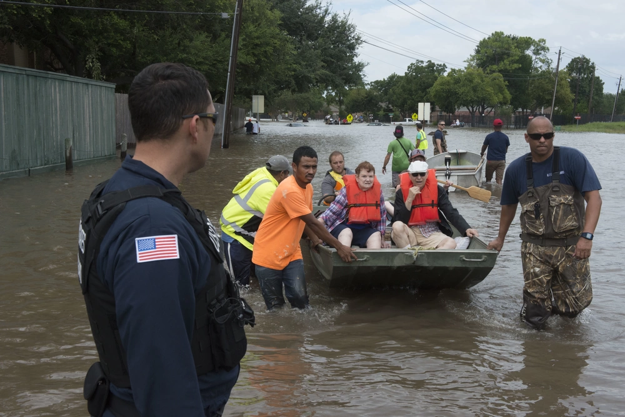
Flood response. Photo credit: U.S. Coast Guard

Federal Policy

Compound Coastal Flood Risk to Drive Migration Away from Coasts

Writing in Yale Climate Connections, Jeff Masters reviews recent research on the causes of coastal flooding, including more severe storm surges, intense precipitation, and sea level rise and concludes that events where all three of these conditions occur at the same time (i.e., compound flooding) will increase in decades ahead and drive a mass migration away from the coasts. After describing projected increases in sea level, Masters notes:

If we now add in the massive additional increase in flood risk resulting from compound flooding, good luck trying to insure your home. The huge increase in climate change-induced flood risk from sea level rise, heavier rainfall, and stronger/slower-moving hurricanes is nearly certain to force abandonment of portions of the U.S. Gulf and Atlantic coasts by late this century, even under a moderate global warming scenario. …


The only recourse we will have is to spend vast amounts of money to defend the most important places and retreat from or abandon the rest. A society-shaking mass migration of millions of Americans away from the coast is inevitable in future decades because of increased climate change-induced flood risk. The trigger for the beginning of this exodus may be only a few years away.

This article in The Washington Post provides supporting information focusing on increased rainfall in the U.S. from increased moisture in the air due to warming oceans and El Niño:

…since June, this extra moisture, transported by winds, has spilled into the contiguous United States, helping to fuel record-breaking rainfall in parts of 44 out of 48 states, covering about 90,000 square miles.

Supreme Court Ruling to Set Precedent for Climate Damage Cases

Suncor v. Boulder, set to be heard by the Supreme Court this fall, may set a precedent for a number of other cases in which state or local governments seek damages from oil companies for the impacts of a changing climate. Time has the details.

A win for the plaintiffs could pave the way for local authorities to seek compensation from the biggest emitters. “If the plaintiffs win on the issue that it's within the power of state courts to issue money damages against the fossil fuel companies over climate change, then these two two dozen other cases that are pending will move forward, and it may be that other similar cases might be filed around the country…”.  

Trump Administration Defends Biden Flood Insurance Rate Policy

The Department of Justice is opposing a legal challenge from ten Republican attorneys general to Risk Rating 2.0, the revised National Flood Insurance Program rate structure developed under Biden and supported by many in the environmental community as a way to reduce development in flood-risk areas,  E&E News reports.

Chad Berginnis, executive director of the Association of State Floodplain Managers, is quoted:

“The president has continued to basically emphasize that the costs to the federal government are too much,” Berginnis said. “It seems to be quite consistent with the president’s stated vision of things.”

GAO Finds FEMA Staff Cuts Harm Disaster Response

The Government Accountability Office (GAO) has issued a report finding that over 4,300 employees separated from FEMA in fiscal year 2025—a 55 percent increase in separations from fiscal year 2024 and that these separations have resulted in a loss of institutional knowledge and experienced personnel and have exacerbated longstanding workforce challenges.

GAO found that FEMA did not base its 2025 and 2026 workforce reduction decisions, proposed future workforce actions, or workforce policy changes on the results of a workforce analysis—an assessment of the current state of the workforce and a forecast of future organizational requirements. FEMA took these actions without assessing whether it had the necessary staffing capacity to meet its mission, including its statutory requirements. Without workforce planning, FEMA is not positioned to determine whether it has the right number of people with the right skills in the right positions at the right time to meet its mission.

This article in Government Executive provides background information.

Gallup/Walton Poll Finds Growing Concern for Disaster Impacts

This new poll from Gallup and the Walton Family Foundation reports nearly four in 10 Americans say their community has felt damage from disaster firsthand in the past year, an increase from prior years. Almost six in 10 U.S. adults whose communities suffered extreme weather damage in the past year are worried it will happen again in the next year. This Grist article provides more information.

Bipartisan Bill to De-politicize Disaster Aid Debated

This article in Energy and Environment News describes a bipartisan bill (Stopping Political Discrimination in Disaster Assistance Act, S. 373) aimed at assuring that disaster aid decisions are free of political bias. Sponsors hope to add the bill to the National Defense Authorization Act to avoid a Presidential veto.


“This is one that sits ready to go, and I don’t think it has a lot of realistic opposition regardless,” said Rep. Scott Perry (R-Pa.), sponsor of the House companion, H.R. 1342. “I could see this as being one of the things that would be a win for everybody, and something that everybody could claim a victory on,” said Perry, who chairs the House Transportation and Infrastructure subcommittee with jurisdiction over disaster response and is one of Congress’ staunchest conservatives. 

House Race Connected to Coastal Policy

In Virginia’s second congressional district, Republican incumbent Jen Kiggans is fighting to hold her seat against former U.S. Rep. Elaine Luria in a district that includes Virginia Beach and Hampton Roads, and abuts Norfolk. Inside Climate News reports that issues related to climate change, including wind power and coastal flooding are part of the debate in the race. Jay Ford, the Chesapeake Bay Foundation’s Virginia policy manager, said:


“What we hear from partners, from local government to state agencies to other NGOs to just the average citizens, is we have to do something about this flooding,” Ford said. “The state has committed significant resources, but we are absolutely looking to the federal government and whoever the next member of Congress is to be a national leader on this.”

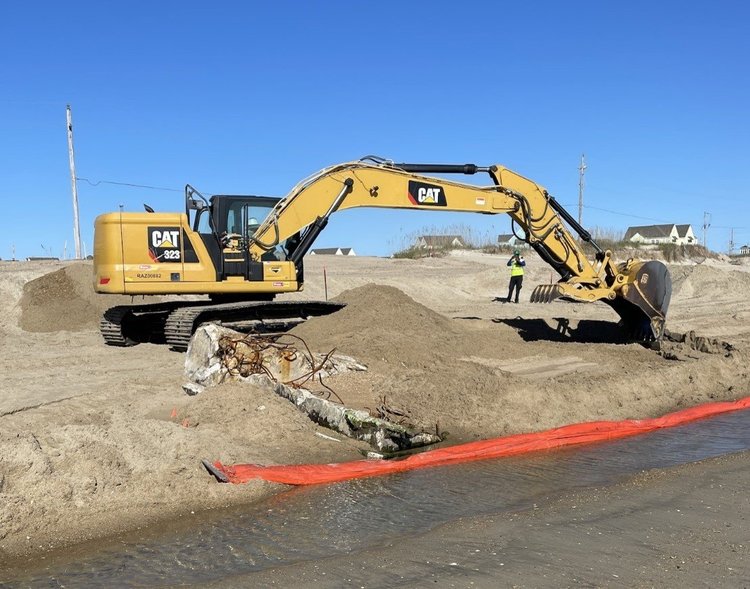
Work in Buxton, N.C. Photo credit: U.S. Army Corps of Engineers

State and Local

North Carolina Groin Project Intended to Protect Nourished Beaches

Work is underway to rebuild a 640-foot groin on the Outer Banks of North Carolina to better manage erosion, per the Island Free Press.

Rather than attempting to stop erosion altogether—a goal engineers say is impossible along an actively migrating barrier island—the groin is designed to work in partnership with the ongoing Buxton beach nourishment project by slowing the movement of newly placed sand and helping it remain on the beach longer.

No engineer or advocate involved with the project has suggested that the groin alone can solve all of Buxton’s erosion problems. Instead, officials and stakeholders have repeatedly described the repair and the ongoing nourishment project as complementary efforts that work together.

Florida Homeowners Moving Inland

Inside Climate News reports that some homeowners in Florida are relocating to inland communities at higher elevations to avoid both flood risks and high home insurance costs.

Some of Florida’s biggest growth spots are now on former citrus groves and cattle pastures in the interior parts of the state far from the state’s famous beachside cities. That’s increasingly due to climate migrants escaping coastline risks like hurricanes and flooding, as well as the high cost of homeownership from skyrocketing insurance rates following a series of recent storms.

“Sebring is on the cusp of exploding,” said Drew Bishop, a local real estate agent. “Everyone is moving from the coasts because of hurricanes and insurance rates and the pull of cheaper housing.”

Florida Adapts to Rising Sea Levels

The Associated Press describes in this article some of the measures that property owners and governments in Florida are implementing to address storm flooding and rising sea levels including seawalls that act as reefs, elevated housing, and use of “sponge parks” to manage stormwater.

Throughout the state, architects and designers are merging infrastructure with urban design to create residential buildings, parks and more. The goal is to better withstand rising waters, worsening storms, saltwater intrusion, heat heaves and other climate impacts.

No mention of relocation, unfortunately.

Florida Inland Towns Seek Resilient Florida Funding

This report from PBS station WUFT describes how “Resilient Florida” has funded 347 infrastructure projects in coastal counties but just 30 in inland ones. Coastal communities have received more than $1.6 billion toward project costs, nearly 20 times what inland counties have.

Ninety-two percent of shovel-ready projects funded since the program’s launch are concentrated in coastal counties. More than half (52%) are in Miami-Dade, Broward and Palm Beach counties alone. The report noted:

The discrepancies have left inland communities struggling to get their fair share of a fund created to serve all of Florida against flooding exacerbated by rising sea levels and stronger storms.

New Hampshire Town Elevates Roads to Reduce Coastal Flooding

This article in the New Hampshire Bulletin describes how the Town of Hampton is spending $4.3 million to elevate roads and build supporting infrastructure, including pumps, to manage rising sea levels. Hampton Deputy Director of Public Works commented:

“What has happened over generations is true. If you believe in it or not, you can’t deny that there is sea-level rise,” he said Tuesday morning. “… Everything we do now in the coastal area is always in light of sea-level rise, whether it’s our wastewater treatment plant, our sewer collection systems, our drainage system, our roadway networks — everything is driven by recognition of what that future condition might look like.”

California Sea Levels Higher Due to El Niño

This article in the Los Angeles Times explains how the El Niño conditions of the next several years are expected to increase sea levels along the California coast, resulting in greater coastal erosion and property damage.

“We’re expecting likely the highest sea levels ever recorded on the California coast associated with this event,” said Mark Merrifield, director of the UC San Diego Scripps Institution of Oceanography’s Center for Climate Change Impacts and Adaptation.

During a recent online town hall, Merrifield presented a NASA satellite image showing sea levels already more than half a foot higher in the eastern Pacific Ocean compared to the reference state, and said by this fall and winter, “we should be seeing sea levels far above the average seasonal cycle.”

According to NASA, El Niño’s warmer ocean water displaces colder water close to the sea surface. Warmer water causes a rise in the sea surface height because water expands as temperature rises.

Charleston Considers New Homes in Flood Risk Area

This article in the Charleston Post and Courier describes the fight over a proposal to replace 28 acres of undeveloped urban forest with 95 new homes in an area prone to flooding.

Many neighbors worry that the planned development could, among other things, exacerbate flooding in an often-inundated neighborhood. City planners and the project’s developers counter that, under Charleston’s current rules, the project would reduce stormwater runoff and help mitigate existing flooding problems south of Maybank.

Adam Friend, a local resident who started a Change.org  to stop the Riverland Oaks project, is skeptical of that claim. His petition, which had received more than 1,700 signatures as of Aug. 7, calls on the City of Charleston to purchase the property and preserve it as a “permanent park or conservation area.”

The Coastal Flood Resilience Project is a network of nonprofit organizations working for stronger federal, state, and local programs to prepare for coastal storm flooding and rising sea levels along the coast of the United States.

88 V Street SW, Washington, DC 20024, United States

Powered by Squarespace

Unsubscribe