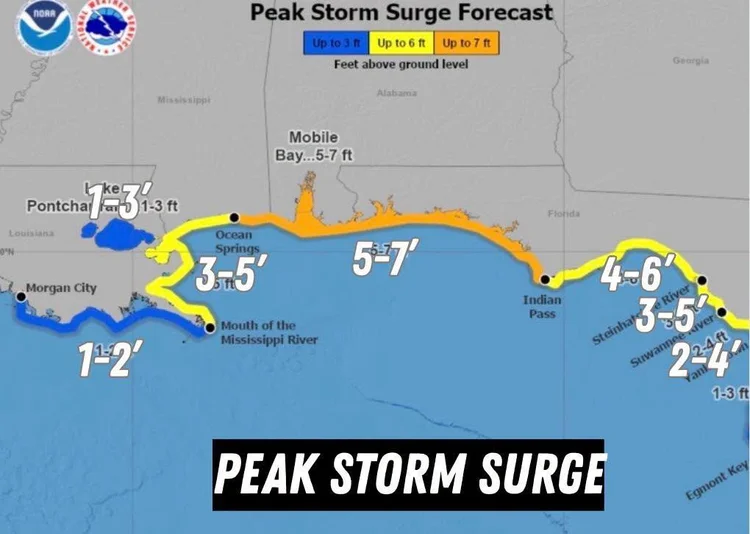
Hurricane Isaias Hits Florida PanhandleThe first major hurricane of the season came ashore near Destin, Florida, on October 9th after weakening from a Category 3 storm to Category 2. The New York Times provides a summary of storm conditions and impacts. In some good news: “Winds dragged water away from the shore in stretches of the area around Mobile, Ala. In Destin, the surge was measured at around four feet, despite initial forecasts of between six and nine feet.” The risk analysis firm Cotality estimated insured loses in the range of $2-3 billion. Federal government losses are not yet estimated. CBO Report Shows Flood Investments Save MoneyA new report from the Congressional Budget Office finds that federal government invests in flood adaptations are more than outweighed by savings for taxpayers. CBO breaks down the 30-year savings as for every $1 billion spent in prevention in present-value terms: Future flood damage costs will decrease by $3 to $4 billion, Taxpayers will save $1.8 billion in disaster spending, and NFIP claims reduced by $300 million, mostly benefiting ratepayers through lower premiums.
This press release from Senator Jeff Merkley, expected to be the next chair or ranking member of the Senate Environment and Public Works Committee, provides background information and this statement: Every year, billions of taxpayer dollars are spent cleaning up and restoring the damage caused by flood waters. From coastal towns to rural communities, climate change related events are exasperating federal resources that are allocated to help families rebuild from these costly disasters… Today, CBO confirms that a simple way for the federal government to be a better steward of taxpayer money, is to invest in flood adaptation methods—such as repairing local dams and levees or working to elevate high-risk properties. We owe it to the American people to make investments that will not only protect their property and surrounding community but also save lives. Suncor v. Boulder Offers Possible Funds for Coastal AdaptationThe U.S. Supreme Court heard oral arguments in Suncor Energy (U.S.A.) Inc. v. County Commissioners of Boulder County (Docket No. 25-170) on October 5, 2026. A decision in favor of Boulder would open a path for many similar suits against oil companies seeking damages and funds for adapting to climate change, including for building coastal flood resilience. This article in The Washington Post provides an overview of the case. A key issue in the case is whether the Clean Air Act preempts state law that would allow injured parties to seek compensation. The preemption issue is explained in this SCOTUSblog post and addressed in this opinion piece in The Hill, authored by former EPA Administrator Gina McCarthy and EPA General Counsel Avi Garbow. Flood Insurance Fails to Cover Significant RiskAn investigation by the AP found that the National Flood Insurance Program (NFIP) does not cover millions of properties facing flood risks and participation in the program is declining. Nationwide, just 2.4% of properties are covered by 4.5 million federal flood insurance policies, an Associated Press analysis shows — but 8.4% are at severe or extreme risk of flooding. The gap illustrates the foundational flaws in a program that fails to balance affordability, flood protection and cost to taxpayers. It’s getting worse. The count of policies is down roughly 500,000 in five years. Price increases are a big factor. This downward trend collides with the rising risk of flooding across many areas of the United States, driven by climate change that can strengthen hurricanes and worsen downpours far from the coasts. Urban Ocean Lab Issues Report on Local Buyout ProgramsUrban Ocean Lab has issued a report looking at how local and regional governments are designing voluntary floodplain buyout programs. The report “surfaces the open questions every program still has to answer: who gets left behind, what happens to the land, and how to know if a buyout is reaching the people who need it most.” This is the first installment in Urban Ocean Lab’s series exploring how local governments are managing, funding, and improving buyout programs. Insurance Group Cites Climate Risks to EconomyThe insurance nonprofit Inside Track has published a report titled “Sounding the Alarm” raising concerns that governments are not alert to the climate risks that are likely to drive significant increases in property insurance rates and that these rate increases pose a risk to the wider economy. We are worried that the risk levels we are seeing either aren’t being communicated to or aren’t being properly internalised by government. Without intervention these physical risks will translate into major economic risk. The undermining of the mortgage market drove the Global Financial Crisis – we are worried a major increase in uninsured, high -risk properties could manifest in a similar way as climate impacts intensify. The report argues that growing climate risks mean that insurers have no choice but to reprice insurance, limit coverage, and in come cases stop offering coverage Senate Bipartisan Permit Reform Bill Includes Coastal State Grant ProgramThe Senate bipartisan permit reform bill includes new authority for the National Fish and Wildlife Foundation Coastal State Fund (see section 1308; page 156) including authority to “award grants to coastal States to support State programs and activities intended to better understand and use coastal resources, coastal and natural infrastructure, and ecosystem services provided by natural systems.” $50 million is authorized for each fiscal year 2028-2032.
|